|
|
 |
|
Greetings all.
I hope you’re building lots of flexibility into your sense of self and your idea of your life. There’s snow on the mountains here and I’m enjoying another day on Earth, so despite my moodiness and the suffering in the world, I’m in touch with gratitude.
This month’s reflection follows from a hadith, a saying of the Prophet Muhammad (may peace be upon him) from the 7th century. In English it goes something like:
"If the Day of Judgment comes for you while you're planting a sapling, carry on and plant it."
Or in the Arabic: إِنْ قَامَتْ عَلَى أَحَدِكُمْ الْقِيَامَةُ وَفِي يَدِهِ فَسْلَةٌ فَلْيَغْرِسْهَا
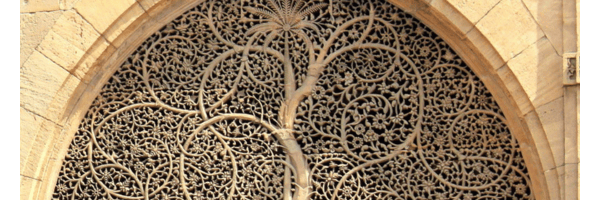
This is interesting in at least three ways. First is the role of humans as a steward or care-taker of the Earth (khalifa in Arabic). This is a super cross-cultural teaching about our responsibilities to the rest of life. The implication seems to be that if we’re going to be surprised by the end of the world (your death, Judgment Day, and/or your personalized form of doom), in that moment when the curtain is being raised, planting a tree is worthy enough to carry on with the task. Agreed.
Second, any mention of "Judgment Day" undoubtedly snags some heavy-handed religious imprinting. My sense of teachings on metaphysical reckoning and accountability, regardless of the tradition, is that we’re talking about a time fractal on at least three overlapping scales: the cosmic (an end of this cycle of time), our personal death and reckoning with our incarnation on Earth, and the death before death that comes from choosing to deeply face, while still alive, soul-level demands and whatever else we like to avoid.
Like other mystical teachings on reckoning, Islam suggests that “death before death” (fana' in Arabic) is a gateway to deeper states of direct knowing. This is wholesome and recommended.
|
 |
|
Third, and most interesting for me, is the strong medicine for our understanding of time and priorities. Muhammad doesn’t say, “When reckoning/death is near, drop what you’re doing, freak all the way out, and stress out everyone around you.” No, we’re encouraged to plant the tree, to “do the next right thing” (please pardon the Frozen reference, I’m raising two young girls).
Or if you prefer a more secular frame, consider the Spanish expression, "Vísteme despacio, que tengo prisa", in English “Dress me slowly, I’m in a hurry.” Precisely because the matter is serious, button each button, focus and plant the tree now.
|
|
|
|
Where in your life do you achieve this type of apocalyptic gardener flow state? What helps you to spend more time there?
Knowing that the greater work will remain unfinished for many lifetimes, see if you can make time to explore holding these polarities in your awareness at the same moment. Let them dance and find a groove. “I am planting a tree beneath an ominous sky. On Judgment Day I pass time with my co-gardener, Death. We notice the clouds and are tending to the cabbage.”
|
 |
|
In addition to caring for family and community, the new trees I’m planting these days are our offerings through Ancestral Medicine, and the team and I are doing all we can to ground them slowly with great love and care.
- In just a few weeks, we begin a brand new full-length course Ancestors and Cultural Healing. This is the focus of book two and the full extension of the lineage healing work into the terrain of proactive cultural repair with the living and the dead. The work speaks directly to our times, and I’m excited to be co-weaving with Amber McZeal, Langston Kahn, and Shannon Willis.
- The week after, focus turns to our second sapling of the year, Writing with the Dead. This collaboration with author Rachel Jamison Webster (and Erica Nunnally supporting) will unfold at the crossroads of ritual, cultural courage, channeling the dead, and foundational writing skills.
- Our most popular and foundational course, Ancestral Lineage Healing begins again in March, and I’ll be co-weaving there with Chi Young Kim, Shannon Willis, and Amber McZeal. If you’d rather connect for an in-person intensive, registration is open for gatherings in Sicily, Barcelona, Costa Rica, and soon Sarajevo. Spaces are limited for all of those and tend to fill in advance.
- If you haven’t noticed the self-paced course library, we have multiple courses available on themes ranging from the nature of evil to animist psychology, grieving and heartache to initiation and the foundations of ritual arts.
- Finally, this Saturday, Dec 21st, join for a free ritual to honor the Solstice with Shannon Willis. If the moving slowly part of urgency is challenging for you, this is one great way to drop in and reorient to your center and deep Earth rhythms.
|
|
|
Keep tending with levity and passion to the heart of the matter.
With spacious urgency,
Daniel
|
 |
|
In Praise of Good Works |
|
In the spirit of collaboration, we feature each month someone outside the Practitioner Network who’s bringing goodness to the world. |
|
|
|
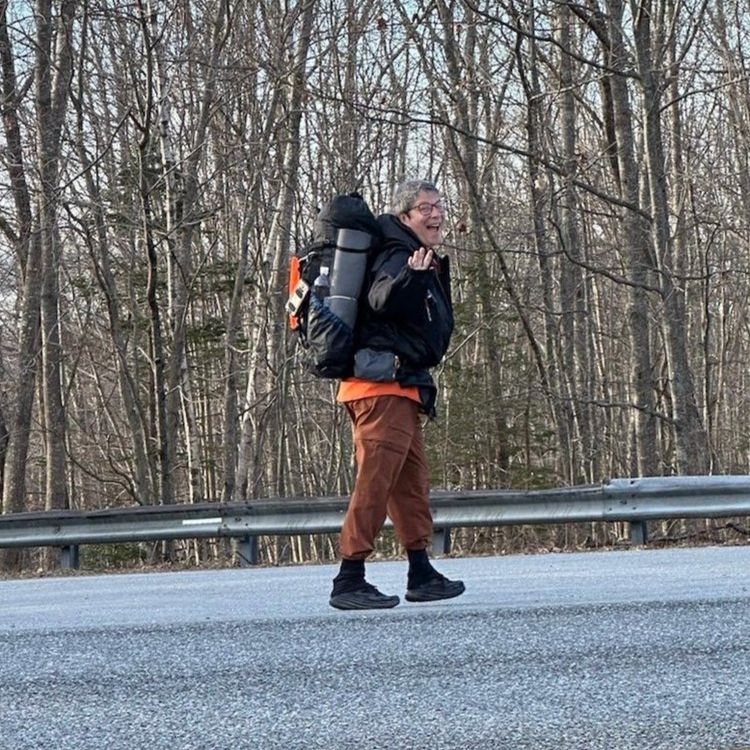
Susan is a stellar person who I've had the good fortune to be in contact with a bit in recent years. She's funny, smart, kind, and committed to cultural healing in ways that are not rigid or pedantic.
In particular, I know her to be a soul on a path of growth. Because she's clever, well-liked, and in leadership roles, she could easily get cozy in one identity but instead she's trailblazing in new uncharted terrain and taking risks. Inspiring! Check out her good works! |
|
|
|
|
|
Susan Raffo is a writer, craniosacral therapist, and community organizer based in Minneapolis, MN. Her life has been shaped by years in Bristol, England, and Rio de Janeiro, Brazil, as well as travels in her 20s, and she’s now fulfilling a lifelong dream of walking across Turtle Island. Susan is the author of Queerly Classed, Liberated to the Bone, and At the Fork on the Road and co-founded the Healing Histories Project and Relationships Evolving Possibilities. Her work is rooted in collective care and the wisdom passed down through generations. Visit her website here.
|
|
|
|
|
|
|