|
|
 |
|
Hi everybody. Salaam y saludos.
I hope you’re still in touch with your heart through all the turbulence here on Earth.
I'm doing pretty alright personally, grateful to being spending my days with people and work that I love. Our family is well, and there are loads of good things happening with Ancestral Medicine, more on that below.
And...my nation of origin, along with Israel, has started another unnecessary, cruel, and illegal war on Earth. I'm full of opinions and feels about it (read on for a few), and asking myself what I have to add that could be not just venting but also supportive of a path that helps keep you and me connected to larger benevolent energies.
For one space to feel nurtured by others in the current moment, I'll co-weave a free teaching tomorrow, March 19, with Nkem Ndefo and Kai Cheng Thom. We're calling it Steady in the Storm: Leading with Courage & Building Community Resilience. We'll reflect on how to stay grounded and values-driven in uncertain times by drawing on ancestral and Earth-honoring traditions. We'll share a recording with all who register.
|
 |
|
As for the new war, as a U.S. citizen living in Spain, I continue to feel between worlds a bit. I have a pulse on mainstream U.S. views, friendships with some Muslim and Iranian people here who have generously helped me to become more informed, and a close-up view of Spain’s more principled positions in contrast to the disregard for international law among most other European nations.
Having spent time both inside and outside the U.S. (and in and out of Muslim tradition), I’ve become more aware of how decades of geopolitical conflict, media narratives, and Islamophobia have shaped American perceptions of Iran and the broader Muslim world. It's morally wrong, infuriating, and heart-breaking.
For example, some Western feminist discourse continues to overlook Muslim women as agents in their own lives. Conversations about liberation can sometimes unfold without sustained listening to the diverse perspectives of women in societies that the U.S. singles out for "rescuing" and/or violent intervention. When Muslim women's voices in their full range and diversity are absent from the public discourse, it becomes easier to ignore, justify, or minimize ongoing forms of imperial aggression.
From the U.S.-enabled killing of over 35,000 women and children in the Gaza genocide (2023-ongoing); to the ongoing U.S. supply of weapons via UAE for the RSF-led genocide in Sudan (ongoing); to the new escalation with Iran and Lebanon with thousands of mostly civilians killed in recent weeks. In these four cases alone, from just one region, the narrative recurs that those directly impacted are victims-in-need-of-rescue, terrorists-threatening-Western-civilization, and/or anonymous and expendable. This dehumanization and killing is not okay, and we each share the responsibility to interrupt the manufacture of consent for endless murder and war.
|
 |
|
|
|
Growing up in the United States, I was taught to think of Iran as an enemy, despite the fact that I could not have named a single Iranian person until my early twenties. Many of the assumptions about Iran that circulate in U.S. discourse, including among liberals and progressives, are harmful stereotypes. And as is so often the case, people living in periphery countries that are targeted by U.S. military, like Venezuela, Palestine, Sudan, Afghanistan, Iraq, Cuba, or Haiti, often develop a more embodied understanding of global power dynamics than those of us living in the imperial core.
Like so many others, I feel both very angry and very sad. Those I talk with in the U.S. feel torn up trying to stay conscious and engaged through it all. I also fear that many Americans still have no idea of the scale of global reorganization that’s been unleashed. And in the meantime, the eco-catastrophe of human supremacy persists.
|
 |
|
|
|
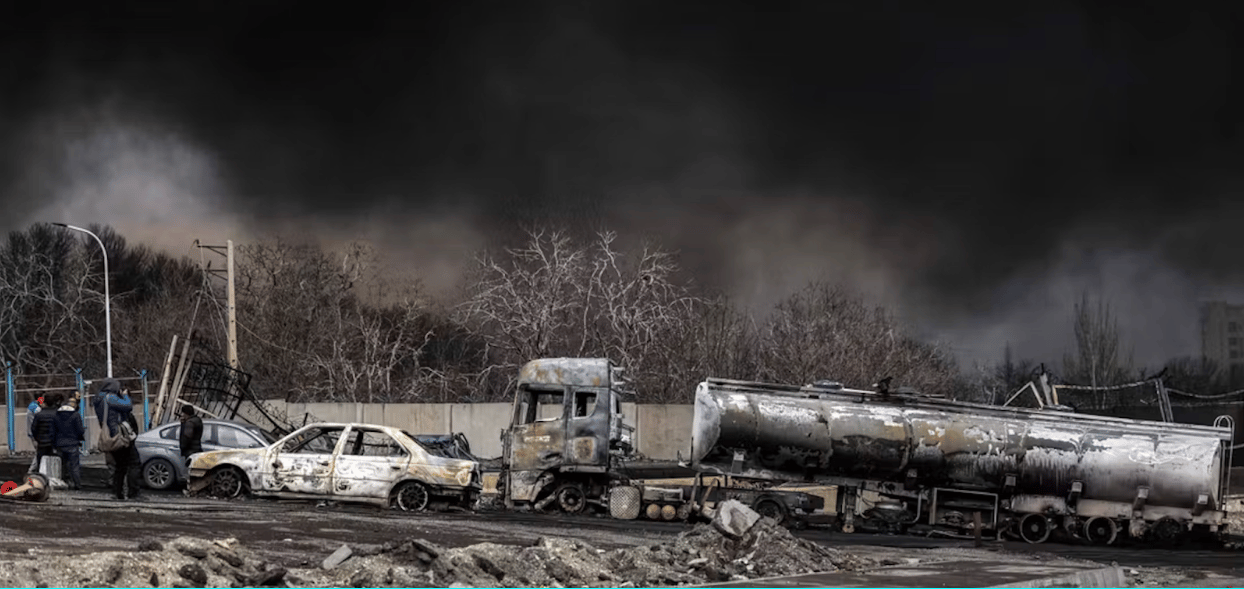
Black smoke over Tehran from recent bombing
|
|
Now for three pithy reflections.
First, if you want peace, go toward the conflict; toward what is not yet peaceful. Sure, we all need to recharge, and if you hang out only in peaceful spaces or states, you may be feasting off the good works of others.
Peace or perhaps liberation is a byproduct of successfully addressing injustice, both interpersonal and systemic. This can take a thousand forms, not all of which look like ‘activism’ per se, but most include turning toward what is not yet peaceful.
In animist practice, we turn toward those we previously failed to fully appreciate as "people," and we aim for respectful relationships. With humans of other nations and neighborhoods, with the troubled dead of our lineages, with the land who remembers the violence and tenderness that preceded us. We center relationships, stretch our capacities to hold different perspectives, and weave a container resilient enough to celebrate difference. This is the first thing; increase our capacities for conflict, turbulence, and co-creating culture with those who are different from us. This necessarily includes those who are not human and not visible in a conventional sense. For example, where is the voice of Petroleum? What would happen if we turned our gaze to the ancestors being invoked to rationalize war? Where's the voice of the land or waters of Iran on current events?
|
|
|
|
Two, work for systemic change requires self-esteem. If you’re discouraged about the abuses of power by those in charge of bombs, wealth, and governments, I’m with you. And we must guard against discouragement becoming a sense of powerlessness, apathy, or nihilism.
Our lives matter a great deal. Your specific life matters. Because all life is precious and also because we're impactful and deeply entangled with others. This means that giving up is off the table. This means it's our moral obligation to inhabit our circumstances with dignity and self-respect. From the Talmud, attributed to Rabbi Tarfon, “It is not our duty to finish the work but neither are we at liberty to neglect it.”
Sustained spiritual practices are quite useful in this regard as they lead one toward a direct experience of the self as holy, an undeniable encounter with the divinity within and all around us. This is good for our self-worth and an antidote to the kind of powerlessness and loss of meaning that capitalism and supremacy encourages. This direct knowledge can be catalyzed by communion with our healed ancestors, with the living Earth, with love in both the cosmic and personal sense, and with Source by whatever name. If your engagement with spiritual practice helps you to be more loving, brave, and fortified in service to life, you’re probably doing it right.
A third and final reflection is that it's useful, at least in part, to understand what's unfolding as a holy war. I definitely don't mean that it's holy in the sense of being justified, desirable, or defensible. The contrary, it's a cruel, illegal and bigoted war of aggression by the U.S. and Israel.
The common story in the U.S. is that religious zealotry is primarily an Muslim thing. But the major participants in this conflict: the U.S., Israel, Iran, Hezbollah, and Iran-allied regional groups are all influenced by religious narratives that shape how they interpret history, priorities, and current events. Many wars are largely secular in terms of their drivers; Ukraine is one example. But religious narratives shape multiple sides of this conflict, not just Iran, and a purely secular analysis misses that.
This isn't to say that all religious narratives are categorically harmful; in the case of Iran, for example, the narrative is often quite aligned with global decolonial movements, even if there are also important differences. I tend to view my own life and priorities in a religious or spiritual way, as I'm sure many of you do as well. And yet.
In the United States, these influences show up as Christian Zionism and white Christian nationalism and they're even more explicitly at the helm now. For example, the U.S. Secretary of Defense has openly called for a crusade against Islam (can one any more explicitly invoke the ghosts?) and a U.S. commander said that Trump has been appointed by Jesus to lead a holy war.
I've included a few resources below to encourage education about this. And it's good to wonder what changes if we view what's happening through this lens of "holy war." This question assumes you're not in favor of trying to make war to accelerate the end of the world to trigger the messiah to come to Earth; if you are, pretty please stop.
In general, I recommend attuning to your wise, kind, and non-dogmatic ancestors and other sources of guidance to ask a focusing question:
What are your antidotes to religious extremism? In a time when such confusions are ascending, how do you suggest I participate in transforming these places of unhelpful righteousness for the good of the Earth?
And, only if their suggestions feel grounded, kind, and life-affirming, try them out.
|
 |
|
May we bring a level of passion and commitment to the future of life on Earth that rivals that of religious extremists but is magnitudes more kind, funny, flexible, and loving. May we pray and play and work for just conditions and a world free from colonialism and religious dogmatism. May we see an end to supremacist systems in our lifetimes, and a passionate reordering of culture in partnership with the land, and with wisdom and mercy. May we see more kind, responsible adults in leadership and a greater appetite for nuance and truth. May our work for real peace include the most marginalized of voices. May mercy and wisdom prevail.
Eid Mubarak for all celebrating the end of Ramadan these days, and please do take a moment to check out our current offerings below!
Daniel
|
 |
|
Applications for Cohort Nine of the Ancestral Healing Practitioner Training are now open! If you're drawn to support others in their ancestral and cultural repair work, give this a close look. Spaces are likely to fill, as we took a one-year pause to level up our systems, and there's a lot of interest.
For those who want to learn more the practitioner training or about how sessions work, join us on May 6 for a free conversation, Mending the Past, Serving the Future, about Ancestral Lineage Healing in practice. I’ll be joined by three practitioners who first came to this work as students and later completed the training.
If you’re just getting curious about ancestor work, Ancestral Healing for Beginners starts April 20 with depth psychologist and ancestral healing practitioner Dr. Amber McZeal. Explore the why, how, and what of this work, as well as what the practice can offer and how to begin in ways that are gentle and psychologically grounded.
Registration recently opened for Ancestral Lineage Healing, which begins May 11. This course offers a practical path for building a steady, nourishing relationship with your ancestors while addressing the burdens that may still echo through the family line. Dr. Amber McZeal and Elah Zakarin, will teach a clear framework for connecting with your wise and well ancestors, tending what needs healing, and inviting more support, clarity, and blessing into world.
If you want to really push the envelope on what is ancestral, our ancient kin, the microbial world plays a critical role in shaping conditions for life on Earth, supporting ecosystems, bodies, and atmospheres through their unseen labor. Relational Living with the Smalls: Adventures with the Microbial World invites a turning of attention toward these often-overlooked collaborators and our relationship with the living systems that support us. Beginning on March 24, live calls will be guided by Dr. Siobhán Watkins alongside fermentation chef David Zilber and a *new* addition to the team, Dr. Iréne Tapantí, a ritual artist, sound therapist, and epigenetics researcher.
I’ll be teaching a new, expanded version of Animist Psychology starting April 28. This course explores what modern psychology often overlooks, including ancestry, culture, ecology, spirit, and unseen relational forces, while offering practical tools for trauma, complex states, and transforming ancestral patterns. With guidance from experienced ritualists and guest teachers, Ashira Darwish and Kai Cheng Thom, we will practice Earth-honoring, relational approaches to healing for therapists, caregivers, ritualists, and anyone seeking deeper connection with self, community, and the unseen.
Grieving Ourselves Whole starts Tuesday, June 30. Langston Kahn and Chi Young Kim will guide you to work with grief as a living ally, connecting personal loss with ancestors, community, and Earth. Each session includes teaching, guided practice, and small-group rituals to help grief become a source of clarity and embodied wisdom.
And finally, this July, we’ll be in person in Tbilisi, Georgia for three days of Ancestral Lineage Healing with me and the team. From July 17–19, we’ll explore ways to build supportive relationships with wise and well ancestors through teaching, guided rituals, and small-group sharing. The intensive is open to all, and spaces are already half full.
|
|
|
- IN SUPPORT OF BEING INFORMED- |
 |
|
Getting Educated on the New and Expanding War |
|
|
|
This is a bigger topic than two short paragraphs, but to start with it's good to understand at least three religious currents at play in the unfolding war.
As I am personally most ancestrally connected to Christian Zionism, and many in our mailing list are based in the United States, I want to make a particular appeal to both understand the far-reaching influence of Christian Zionism in current U.S. policy and to take steps to counter the intense dehumanization and demonization of the current government and people of Iran.
Although I differ in important ways with the Iranian government on matters like freedom of expression and views toward LGBTQ+ people, I also align with their deep solidarity with Palestinians, rejection of U.S. imperialism, cultural pride, and wish to not be attacked simply for not being obedient to colonial powers.
As part of our path toward a more just, equitable, and Earth-honoring world, may we each bring more humanizing nuance to current affairs.
|
|
|
|
|
|
|
|
|


